Understanding Vapor Drive in Aurora's Zone 5A Climate
If you live in Aurora, you're in the heart of USDA Hardiness Zone 5A, a region that experiences dramatic seasonal temperature swings. Winter temperatures plunge well below freezing, while summer heat and humidity create intense moisture pressure from the ground up. This seasonal flip in temperature and humidity creates what building scientists call vapor drive, a powerful force that pushes moisture through your home's foundation and into your living spaces.
Vapor drive isn't just about comfort. When moisture accumulates in crawl spaces and under floors, it creates conditions for mold growth, wood rot, and structural damage that can cost thousands to repair. The problem intensifies because Aurora sits in a region where the ground stays wet much of the year due to seasonal precipitation and groundwater. Without proper insulation and moisture control, your crawl space becomes a moisture reservoir that affects your entire home.
Why Crawl Space Spray Foam Insulation Stops Vapor Drive
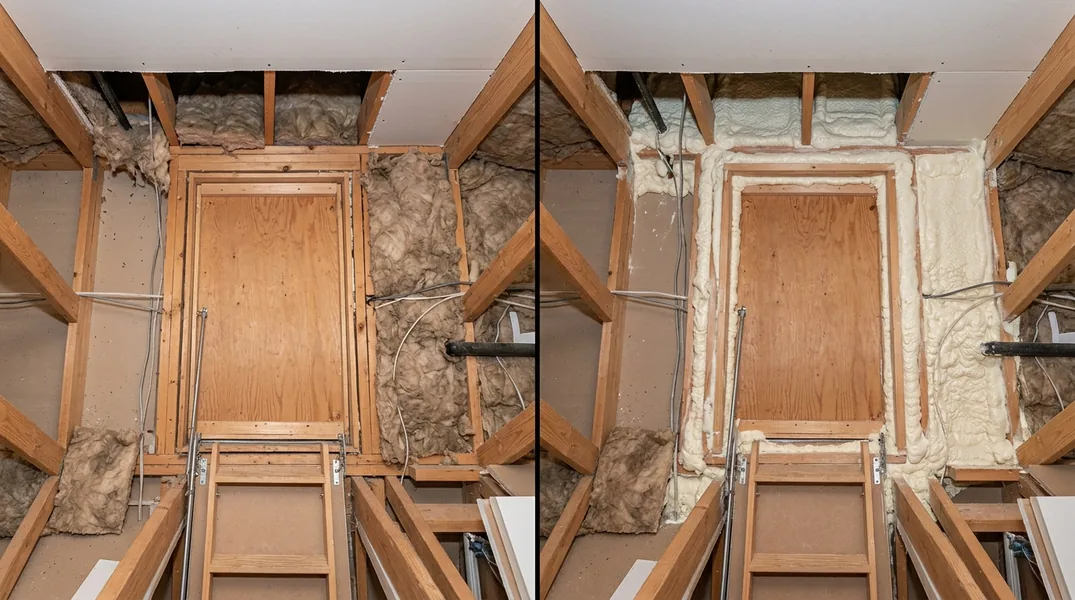
Closed Cell Spray Foam Insulation is the gold standard for controlling vapor drive in crawl spaces because it does something traditional fiberglass insulation cannot: it creates an air-tight, moisture-resistant barrier. When spray foam expands and hardens, it seals every crack, gap, and void in your crawl space. This continuous barrier stops vapor from migrating upward into your home, regardless of the season or weather conditions.
The key difference between spray foam and conventional insulation lies in vapor permeability. Fiberglass batts and blown-in cellulose allow moisture to pass through them, which means they can actually trap humidity against your rim joists and floor framing. Closed cell spray foam, by contrast, has an extremely low vapor permeability rating, making it ideal for below-grade applications where moisture control is critical. For homeowners dealing with cold floors, wet crawl spaces, or seasonal moisture problems, Closed Cell Spray Foam Insulation addresses the root cause rather than just the symptom.
Crawl Space Spray Foam vs. Traditional Crawl Space Insulation Methods
When researching the best insulation for crawl space applications, homeowners often compare spray foam to fiberglass batts, blown-in insulation, and rigid foam boards. Each method has trade-offs, but spray foam consistently outperforms alternatives in moisture-prone environments like those found throughout Aurora. Fiberglass requires a vapor barrier to prevent moisture accumulation, and even with a barrier, gaps around pipes, beams, and rim joists allow vapor to bypass the insulation entirely. Blown-in cellulose performs similarly and can actually absorb moisture, compressing over time and losing its R-value.
Rigid foam boards offer better moisture resistance than fiberglass, but they require careful sealing at all edges and joints to be effective. Installation is labor-intensive, and any small gap can become a pathway for vapor infiltration. Spray foam eliminates these installation gaps because it expands to fill every void as it's applied. This seamless coverage is especially valuable in crawl spaces with complex framing, multiple support posts, and irregular rim joists. For homeowners seeking the best insulation for crawl space conditions in Zone 5A, spray foam delivers superior moisture control and long-term durability.
Pier and Beam Insulation: A Specialized Application for Aurora Homes
Some Aurora homes, particularly older properties and those in certain neighborhoods, are built on pier and beam foundations rather than concrete slabs. These elevated crawl spaces face unique insulation challenges because they're fully exposed to outdoor air and ground moisture from multiple angles. Pier and beam insulation requires a solution that can handle constant exposure to temperature swings, moisture, and air infiltration.
Spray foam insulation is particularly well-suited to pier and beam homes because it can be applied to the underside of the floor system, creating a thermal and moisture barrier that protects both the insulation itself and the wood framing above. Unlike fiberglass batts that sag, compress, and lose effectiveness over time when exposed to moisture, spray foam maintains its R-value and protective properties indefinitely. The closed-cell formula resists water absorption and provides structural reinforcement to the rim joists and band boards, which is an added benefit that traditional insulation cannot offer. If you own a pier and beam home in Aurora and are experiencing cold floors, moisture odors, or energy bills that climb with the seasons, spray foam insulation is worth serious consideration.
Cold Floors Insulation: Solving the Problem at Its Source
Cold floors are one of the most common complaints from Aurora homeowners, particularly during winter months. Many assume the problem is simply a lack of insulation, but often the real culprit is a combination of poor insulation and uncontrolled vapor drive. When moisture enters your crawl space and rises through the floor system, it carries latent heat with it. This moisture then condenses on the underside of your flooring, cooling it dramatically. Even if you add more fiberglass insulation, the moisture problem persists, and cold floors remain.
Cold floors insulation solutions that use closed-cell spray foam address both the thermal and moisture components of the problem. By sealing the crawl space and eliminating vapor drive, spray foam allows your floor insulation to perform at its rated R-value without the cooling effect of migrating moisture. Homeowners typically report noticeably warmer floors within days of having spray foam applied. This comfort improvement translates directly to energy savings because your heating system doesn't have to work as hard to maintain comfortable indoor temperatures. For a free estimate on crawl space spray foam installation, contact Aurora Spray Foam Insulation at (331) 258-5715.
Crawl Space Spray Foam Cost in Aurora: What to Budget
Understanding the investment required for crawl space spray foam installation helps homeowners make informed decisions. The cost of spray foam insulation varies based on several factors, including the size of your crawl space, the thickness of foam applied, the complexity of the space, and current material prices. A typical crawl space in Aurora might range from 800 to 1,500 square feet, and closed-cell spray foam typically costs between $1.50 and $2.50 per board foot when professionally installed. This means a complete crawl space project might range from $1,200 to $3,500 or more, depending on your specific situation.
While this represents a significant upfront investment, the long-term value is substantial. Homeowners typically recover their investment through reduced heating and cooling costs within five to ten years, and the moisture protection prevents expensive structural repairs that could cost far more. Additionally, improved indoor air quality, elimination of musty odors, and increased comfort add immeasurable quality-of-life benefits. To get an accurate pricing estimate tailored to your home's specific needs, reach out to Aurora Spray Foam Insulation. Our team can assess your crawl space and provide a detailed quote that reflects your actual project scope and local market conditions.
Looking for a professional spray foam insulation contractor in Aurora? Aurora Spray Foam Insulation responds fast for all your spray foam insulation needs.
Get a Free Quote