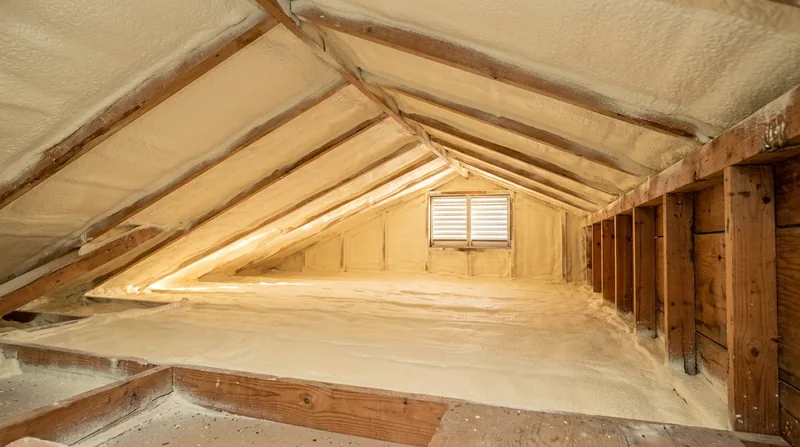




Attic spray foam insulation in Aurora transforms hot, drafty attics into conditioned spaces that hold temperature through zone 5A winters and humid Fox Valley summers. Mid-century ranches and split-levels across Aurora, Naperville, and Oswego lose heat fast through thin, settled fiberglass and unsealed penetrations. Newer two-story homes with bonus rooms over garages face the same problem from a different angle: unvented attic assemblies that sweat in summer and freeze in winter. We spray the roof deck, seal rim joists and band joists, and create an air-tight thermal barrier that keeps energy bills down and rooms livable year-round. Since 2011, we have insulated hundreds of attics across Kane, DuPage, Kendall, and Will counties with closed cell and open cell foam, written estimates that specify R-value and thickness, and the kind of attention to detail that separates a sound installation from a rig-and-run job.
Why Attic Spray Foam Insulation Matters in Aurora's Seasonal Climate
Aurora sits in the path of cold air from the Great Lakes and humid summer thunderstorms rolling up the Fox Valley. Your attic is not conditioned space, which means it swings wildly between outdoor temperatures and humidity levels. Fiberglass settled thin over decades, air leaks around ducts and electrical penetrations, and unvented attic assemblies that trap moisture all drive energy waste and comfort problems that spray foam fixes in one project.
- We seal every penetration in the roof deck, stopping air leaks that cost you money every month.
- Spray foam creates a true vapor barrier that moves with the seasons, protecting wood framing from the moisture swings that rot rafters and joists.
- A conditioned attic keeps rooms over garages and bonus rooms stable, so you use less air conditioning in summer and less heat in winter.
- Closed cell foam delivers higher R-value per inch, which matters when headroom is tight or when you need to meet code in a retrofit.
The result is lower energy bills, no more temperature swings in upstairs rooms, and a roof assembly that stays dry through both the damp winters and humid summers that define this region.
Key info: Aurora's older homes near downtown and along the Fox River carry full basements and uninsulated rim joists that bleed cold air in winter. Mid-century ranches from Montgomery to Oswego have attics with settled fiberglass over unvented roof decks. The newer subdivisions pushing south toward Kendall County bring complex roof lines and bonus rooms that need sealed, conditioned attic space. All three housing types benefit from foam, but the retrofit job (removing old fiberglass and spraying the deck) is the most common call we get.
The Illinois Department of Financial and Professional Regulation does not license individual insulation installers, but your city building department does enforce energy code and requires permits for attic work in most cases. Always check with your local building official before starting, and verify that any contractor you hire carries full insurance and can provide references from jobs in your neighborhood. Get a free estimate from us that includes R-value and thickness specs, so you know exactly what you are paying for.
How We Spray Attic Foam in Aurora: Our Process from Start to Finish
We start with a detailed walkthrough of your attic to measure square footage, identify penetrations, check for moisture or contamination, and confirm that the substrate is sound and dry. We then write an estimate that specifies the R-value you will get, the foam thickness in each zone, and the type of foam (closed cell or open cell) that best fits your climate and budget. On the day of the job, we set up mechanical ventilation to manage fumes, spray the foam in controlled passes to hit the target thickness, apply a thermal barrier if code requires it, and leave your attic cleaner than we found it.
- We inspect the attic for active leaks, mold, or pest damage and walk away if the substrate is not ready, because foam does not fix a wet attic.
- We seal rim joists, band joists, and all penetrations (electrical, plumbing, HVAC chases) at the same time, so you get a complete air-sealing job.
- We maintain the drum temperature and pump ratio that the foam manufacturer specifies, so the material cures with the density and R-value the estimate promises.
- We run mechanical ventilation during the cure window and provide a re-entry timeline of 24 to 48 hours, so you know when the space is safe to occupy.
The whole process typically takes one to three days depending on attic size and complexity. We then schedule a follow-up inspection to confirm coverage and answer any questions about maintenance or future work.
Local example: A ranch home in Aurora with a 1,200-square-foot attic over an unvented roof deck, 6 inches of settled fiberglass, and three separate roof penetrations took us two days to prep, spray 5.5 inches of closed cell foam to R-38, and seal the rim joist where the attic meets the top plates of the exterior walls. The homeowner's winter heating bills dropped 18 percent, and the upstairs bedroom no longer felt drafty.
Learn more about how closed cell spray foam delivers performance in zone 5A climates, or explore air sealing as a standalone service if your attic structure is sound and you need only penetration sealing.
Attic Spray Foam Insulation Methods: Closed Cell vs. Open Cell
| Approach | Description | Best for |
|---|---|---|
| Closed Cell Spray Foam | High-density foam (1.5 to 2.0 pounds per cubic foot) that creates a rigid, moisture-resistant barrier. R-value runs 6.0 to 6.5 per inch. Acts as both insulation and air barrier. | Vented or unvented attics in zone 5A where moisture control matters. Retrofit jobs where headroom is limited. Attics with complex roof lines or exposed beams. |
| Open Cell Spray Foam | Lower-density foam (0.5 pounds per cubic foot) that is softer and more flexible. R-value runs 3.5 to 3.8 per inch. Allows vapor to move through the material. | Vented attics where you want sound dampening and a lower cost per square foot. Attics with plenty of headroom and no moisture concerns. New construction where code allows. |
| Removal and Replacement | We tear out failed fiberglass, old foam, or contaminated insulation, vacuum debris, inspect the structure, and then spray new foam to spec. Most common retrofit in Aurora. | Attics where the old insulation has settled, is wet, or is blocking airflow. Any attic where you want to upgrade to foam from fiberglass. |
| Sealed Roof Deck Assembly | We spray foam directly to the underside of the roof sheathing and seal all penetrations, creating an unvented attic that is part of the conditioned envelope. | New construction and major renovations. Bonus rooms and finished attics. Attics where you want to condition the space and eliminate traditional roof ventilation. |
Attic Spray Foam Insulation Cost in Aurora: What to Expect
Attic spray foam typically runs starting at $1.50 per square foot for basic open cell work on a sound, accessible attic. Closed cell foam, which delivers higher R-value and moisture control, costs more per square foot but requires less thickness to hit the same R-value target. A 1,200-square-foot attic retrofit with 5.5 inches of closed cell foam to R-38, including removal of old fiberglass and sealing of penetrations, typically ranges from $2,500 to $4,500 depending on roof complexity, access, and whether the attic is vented or will become an unvented assembly.
Several factors move the price up or down. Attics with limited headroom or complex roof lines cost more to spray safely. Attics that require substantial removal of old insulation or contaminated material add labor. Unvented attic assemblies (where foam goes directly to the roof deck) cost more than spray-over-existing-structure jobs because they demand more precision and often require a thermal barrier for code compliance. Access matters too: if the attic is tight, if there are no existing stairs, or if the roof pitch is steep, setup and safety take longer.
The best way to know your actual cost is to get two or three written estimates from local contractors who specify R-value, thickness, and the type of foam they recommend. We provide detailed pricing guidance and a free estimate with no obligation, so you can compare apples to apples across contractors.
What to Look for When Hiring a Spray Foam Insulation Contractor Near Aurora
The spray foam trade has two populations: local independents who live in the community and answer the phone when something goes wrong, and national franchises or rig-and-run crews that spray an attic in an afternoon and disappear when the smell will not fade or the coverage is thin. You want the first kind. Start by asking any contractor for references from jobs in your neighborhood, in your zip code, within the last two years. Call those homeowners and ask whether they would hire the same crew again. Ask whether the estimate included R-value and thickness specs, not just a price per board foot. Ask whether the contractor had mechanical ventilation running during the cure and gave a clear re-entry window.
- Verify that the contractor carries full insurance and can provide a certificate of insurance naming your address as an additional insured.
- Ask whether the contractor pulls permits through your local building department and understands the thermal barrier and ventilation rules that apply at your address.
- Check that the contractor can explain the difference between closed cell and open cell foam and recommend one based on your attic type and climate, not just price.
- Confirm that the estimate is written, specifies R-value and thickness, and includes a timeline and re-entry window before you sign anything.
- Ask about workmanship warranty, which honest contractors offer for one to three years, never a lifetime guarantee.
Red flags include an estimate with no R-value or thickness, a price far below market with no inspection, a promise of re-entry within hours instead of 24 to 48 hours, and insurance that cannot be verified. Contact us for a free, no-obligation estimate and we will walk you through every detail of the job, answer your questions, and help you understand what you are paying for.
Attic Spray Foam Insulation in Aurora: Pricing Guide
| Service | Price | Details |
|---|---|---|
| Open Cell Spray Foam Attic | Starting at $1.50/sq ft | Vented attic, sound substrate, standard access, includes basic air sealing and penetrations |
| Closed Cell Spray Foam Attic | Starting at $2.25/sq ft | Unvented or sealed roof deck assembly, higher R-value per inch, moisture control, complex roof lines |
| Removal and Replacement | Starting at $1.75/sq ft | Includes tear-out of old fiberglass or failed foam, debris removal, inspection, and new foam spray to spec |
| Complex or Large Attic Retrofit | On estimate | Substantial contamination, limited access, multiple roof penetrations, or unvented assembly requiring thermal barrier |
| Travel and Setup | Included | No separate mileage fee or travel charge for jobs in Aurora and surrounding service area cities |
| Free Written Estimate | Free | Includes R-value and thickness specs, on-site measurement, 24-hour response at (331) 258-5715, no obligation |
Indicative pricing, the exact cost depends on square footage, finish, and site access. Free personalized estimate within 24h at (331) 258-5715.


