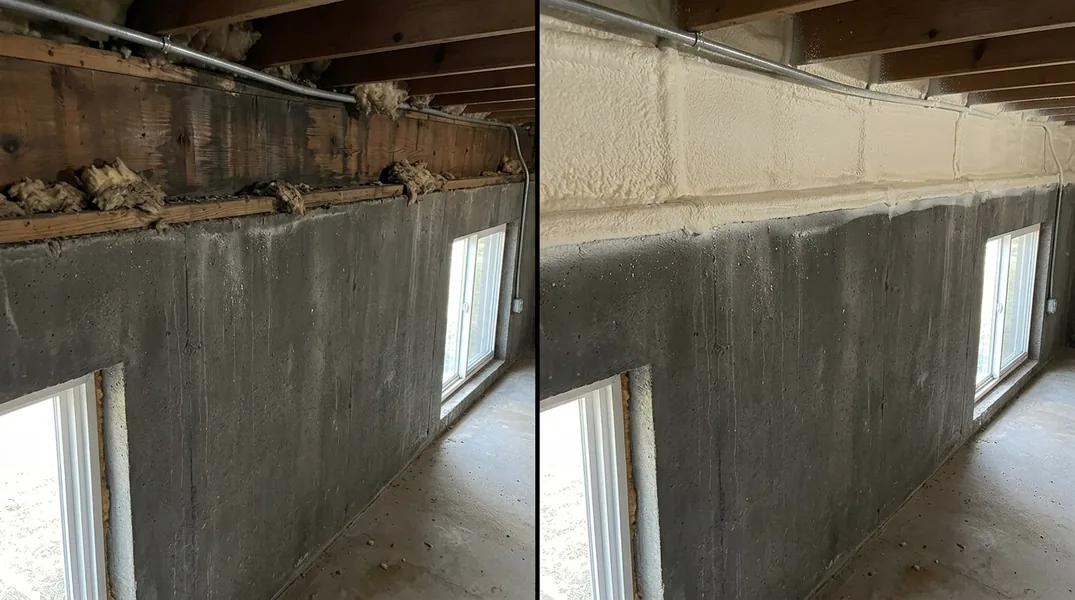
Understanding Spray Foam Insulation Types
When it comes to upgrading your home's insulation, attic spray foam insulation has become one of the most effective solutions for homeowners in Aurora. Unlike traditional fiberglass batts or blown-in cellulose, spray foam creates an air-tight seal that dramatically reduces energy loss and improves your home's thermal performance. However, not all spray foam is created equal. The two primary types, open cell and closed cell, offer distinct advantages and disadvantages that can significantly impact your home's comfort, energy efficiency, and long-term costs.
Understanding the structural differences between these two foam types is essential before making a decision. Open cell foam has a lower density and contains cells that are not completely enclosed, allowing air and moisture to pass through the material. Closed cell foam, by contrast, features cells that are fully enclosed, creating a denser, more rigid barrier. These fundamental differences affect everything from insulation value to vapor permeability, making it crucial to choose the right type for your specific attic conditions and climate zone.
Open Cell Spray Foam Insulation: Benefits and Drawbacks
Open Cell Spray Foam Insulation is a semi-rigid foam that expands significantly after application, filling cavities and creating a sound-dampening barrier. One of the primary advantages of open cell foam is its cost effectiveness. It typically costs less per board foot than closed cell alternatives, making it an attractive option for homeowners working within a budget. Additionally, open cell foam is excellent for sound absorption, which can be a significant benefit if you're concerned about noise from outside or between rooms in your home.
Another notable advantage of open cell foam is its flexibility. Because it remains somewhat pliable, it can accommodate minor building movement without cracking or separating from surfaces. This characteristic makes it particularly suitable for older homes in Aurora that may have settled over time. However, open cell foam does have limitations. It provides an R-value of approximately 3.6 per inch, which is lower than closed cell alternatives. Additionally, open cell foam is permeable to moisture and air, meaning it won't create a truly sealed attic insulation system on its own. This can be problematic in humid climates or in applications where moisture control is critical.
Closed Cell Spray Foam Insulation: Superior Performance and Protection
Closed Cell Spray Foam Insulation delivers superior insulating performance with an impressive R-value of approximately 6.5 to 7 per inch, nearly double that of open cell foam. This higher insulation value means you need less material to achieve your desired thermal resistance, which can be particularly advantageous in attics with space constraints. More importantly, closed cell foam creates a true sealed attic insulation barrier that prevents air infiltration and moisture penetration, providing comprehensive environmental control that open cell simply cannot match.
The structural rigidity of closed cell foam makes it an excellent choice for unvented attic applications. When you create an unvented attic spray foam system with closed cell foam, you're essentially creating a conditioned space that becomes part of your home's thermal envelope. This approach can prevent moisture accumulation, reduce ice dam formation in winter, and eliminate the need for attic ventilation. The trade-off is that closed cell foam carries a higher initial cost, typically 40 to 60 percent more expensive than open cell alternatives. However, many homeowners find that the superior performance, durability, and energy savings justify the premium investment over the long term.
Attic Spray Foam Insulation Cost in Aurora: What to Budget
When evaluating attic spray foam insulation options, cost is understandably a major consideration. Open cell spray foam typically ranges from $1.00 to $1.50 per board foot, while closed cell foam generally costs between $1.50 and $2.50 per board foot. For a typical 1,000 square foot attic with 6 inches of insulation depth, you might expect to pay anywhere from $6,000 to $15,000 depending on which type you choose, local labor rates, and the complexity of your attic's configuration. Aurora homeowners should also factor in that spray foam application requires professional installation, as the equipment and expertise needed are beyond the scope of DIY projects.
The initial investment should be viewed in the context of long-term energy savings. Homes with spray foam attic insulation often see heating and cooling cost reductions of 15 to 30 percent, depending on factors like your home's age, existing insulation, and climate control habits. Many homeowners recover their investment within 5 to 8 years through utility bill savings. To get an accurate assessment of what your project will cost and what return on investment you can expect, reach out to Aurora Spray Foam Insulation at (331) 258-5715 or request a free estimate today. Our team will evaluate your attic's unique needs and provide transparent pricing based on your specific situation.
Moisture Control and Vapor Permeability: A Critical Consideration
One of the most important factors to consider when choosing between open cell and closed cell foam is how each material handles moisture. Open cell foam is vapor permeable, meaning it allows moisture to pass through it. In climates with seasonal humidity variations, this can actually be beneficial, as the foam won't trap moisture within wall cavities. However, in attic applications, open cell foam typically requires a vapor barrier on the warm side of the insulation to prevent moisture from migrating into the foam itself and potentially causing mold growth or degradation.
Closed cell foam functions as both an insulator and a vapor barrier. Its impermeable nature means moisture cannot pass through it, eliminating the need for additional vapor barriers in most applications. This is particularly valuable in unvented attic systems where you're creating a sealed, conditioned space. By preventing moisture infiltration, closed cell foam helps protect your home's structural components from rot, mold, and pest damage. For Aurora homes with older construction or those prone to humidity issues, this added protection can be invaluable for long-term structural integrity.
Choosing the Right Foam for Your Aurora Home
Deciding between open cell and closed cell spray foam ultimately depends on your specific needs, budget, and long-term goals for your home. If you're looking for an economical solution to improve attic insulation and you're comfortable with the lower R-value, open cell foam may be sufficient, particularly if your attic is already somewhat conditioned through your home's HVAC system. However, if you want maximum energy efficiency, superior moisture protection, and the ability to create a true sealed attic insulation system, closed cell foam is the superior choice despite its higher initial cost.
Your climate zone and local weather patterns also play a significant role in this decision. Aurora experiences cold winters and humid summers, making moisture control a legitimate concern. For most homes in our area, the benefits of closed cell foam's superior R-value and vapor barrier properties typically outweigh the cost premium. The best way to determine which option is right for your specific situation is to consult with experienced professionals who understand your home's unique characteristics. Contact Aurora Spray Foam Insulation today at (331) 258-5715 to discuss your attic insulation needs and receive a personalized recommendation based on your home's condition and your energy efficiency goals.
Looking for a professional spray foam insulation contractor in Aurora? Aurora Spray Foam Insulation responds fast for all your spray foam insulation needs.
Get a Free Quote