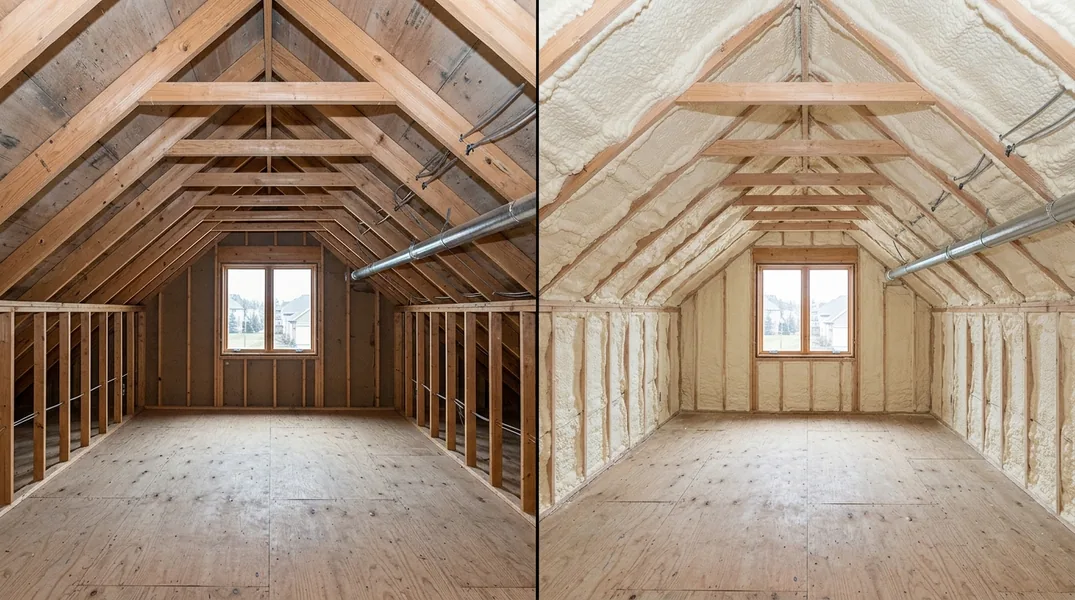
The Boom in Oswego-Area Subdivisions: New Homes, New Insulation Challenges
The suburbs west of Aurora are experiencing significant growth. New subdivisions toward Oswego are attracting families looking for modern construction, spacious floor plans, and the appeal of newer neighborhoods. One architectural trend that's become increasingly popular in these developments is the bonus room built directly over an attached garage. While this design choice adds valuable square footage and flexibility to a home's layout, it also introduces unique insulation challenges that many homeowners don't anticipate until their first winter heating bill arrives.
Bonus rooms over garages are particularly vulnerable to temperature fluctuations because they sit directly above an unheated or partially heated space. Without proper insulation, warm air escapes through the garage ceiling in winter, and heat radiates down from the roof in summer. Many builders in the Oswego area use standard fiberglass batts or blown-in cellulose, which may meet code minimums but fall short of delivering the thermal performance and air-sealing benefits that modern homeowners expect. That's where professional Attic Spray Foam Insulation comes into play.
Why Garage Ceilings Demand Better Insulation Than Standard Materials
A garage ceiling is fundamentally different from a traditional attic space. Garages are exposed to outdoor temperatures, vehicle exhaust, and moisture from rain and snow. When a bonus room sits directly above, that garage becomes a thermal bridge that pulls energy from the living space. Standard insulation materials like fiberglass batts have several limitations in this application. They settle over time, they don't seal air leaks, and they can absorb moisture, reducing their effectiveness and potentially creating conditions for mold growth.
Closed Cell Spray Foam Insulation addresses these issues comprehensively. It expands to fill every cavity, crack, and gap, creating an air barrier that prevents heated or cooled air from escaping. Closed cell foam also has a higher R-value per inch than traditional materials, meaning you get superior insulation in a thinner application. For homeowners in new subdivisions toward Oswego who want their bonus rooms to feel comfortable year-round without excessive HVAC strain, closed cell spray foam is the gold standard. The material also resists moisture absorption and provides structural reinforcement to the ceiling, which can be an added benefit in a garage environment.
Insulation Removal Cost in Aurora: Understanding the Full Picture
Before upgrading to spray foam, many homeowners need to address existing insulation. If your home in a new Oswego-area subdivision was built within the last 10 to 15 years, the original attic insulation removal process may still be necessary if you're planning a retrofit. Even newer homes sometimes have substandard or improperly installed insulation over garage ceilings. The insulation removal cost depends on several factors: the square footage of the space, the type and depth of existing material, and the complexity of the removal process.
Old insulation removal typically ranges from $0.50 to $2.00 per square foot, depending on local labor rates and disposal requirements in the Aurora area. If your garage ceiling contains old insulation removal that includes vermiculite or asbestos (more common in homes built before the 1980s, though less likely in newer subdivisions), the cost will be higher because specialized hazmat removal is required. For most homeowners in new Oswego subdivisions, the existing insulation is standard fiberglass or cellulose, which is straightforward to remove. The investment in professional removal ensures the space is clean and ready for new spray foam application, which maximizes the performance of your upgrade. Contact Aurora Spray Foam Insulation at (331) 258-5715 to discuss your specific situation and get an accurate estimate.
Vermiculite Insulation: A Concern in Some Older Homes Near Oswego
While most new subdivisions toward Oswego feature homes built with modern materials, some properties in the broader region may have older structures or additions that contain vermiculite insulation. Vermiculite is a lightweight, porous mineral that was widely used as loose-fill insulation from the 1930s through the 1980s. The problem is that much of the vermiculite insulation produced during this era came from mines contaminated with asbestos. If asbestos fibers are present and the insulation is disturbed, it poses serious health risks including mesothelioma and lung cancer.
If you're considering a home purchase or renovation in the greater Oswego area and suspect vermiculite insulation may be present, do not attempt removal yourself. Professional old insulation removal specialists have the training, equipment, and certifications to safely handle potentially hazardous materials. After proper removal and remediation, spray foam insulation provides a clean, safe, and high-performance replacement that will serve your bonus room or garage ceiling for decades. If you're unsure whether your property contains problematic materials, Aurora Spray Foam Insulation can perform an assessment. Call (331) 258-5715 to schedule a free estimate.
Open Cell vs. Closed Cell Spray Foam: Which Is Right for Your Bonus Room
When planning an insulation upgrade for a bonus room over a garage, you'll encounter two main spray foam options. Closed Cell Spray Foam Insulation is denser, has a higher R-value (approximately R-6 per inch), and provides superior air sealing and moisture resistance. It's the ideal choice for garage ceilings because garages are exposed to weather and temperature swings. Closed cell foam is also more durable and provides structural support, making it especially valuable in applications where the ceiling may experience vibration or movement.
Open Cell Spray Foam Insulation is lighter, more flexible, and less expensive than closed cell. It has an R-value of approximately R-3.5 per inch, so you need more thickness to achieve the same thermal resistance. Open cell foam is permeable to moisture, which makes it better suited for interior walls and attics in dry climates, but less ideal for garage ceiling applications where moisture exposure is higher. For bonus rooms over garages in the Oswego area, closed cell is generally the superior choice, though your specific needs may vary. Aurora Spray Foam Insulation can help you evaluate both options and recommend the best fit for your project.
Getting Started: Schedule Your Attic Spray Foam Insulation Assessment Near Me
If you own a home in a new subdivision toward Oswego with a bonus room over the garage, or if you're considering such a purchase, now is the time to evaluate your insulation strategy. Poor insulation in these spaces wastes energy, increases utility costs, and compromises comfort. Professional spray foam insulation delivers measurable improvements in thermal performance, air quality, and home value. Aurora Spray Foam Insulation serves the entire Aurora region and has the expertise to handle bonus rooms, garage ceilings, and complex retrofit projects.
The first step is a thorough assessment of your current insulation and your home's specific needs. Our team will evaluate the condition of existing materials, identify air leaks, and recommend the most cost-effective solution. Whether you need attic insulation removal followed by spray foam installation or a complete energy upgrade, we'll provide transparent pricing and a detailed project plan. Contact Aurora Spray Foam Insulation today at (331) 258-5715 or visit our website to request a free estimate. Let us help you transform your bonus room into a comfortable, energy-efficient space that you'll enjoy year-round.
Looking for a professional spray foam insulation contractor in Aurora? Aurora Spray Foam Insulation responds fast for all your spray foam insulation needs.
Get a Free Quote