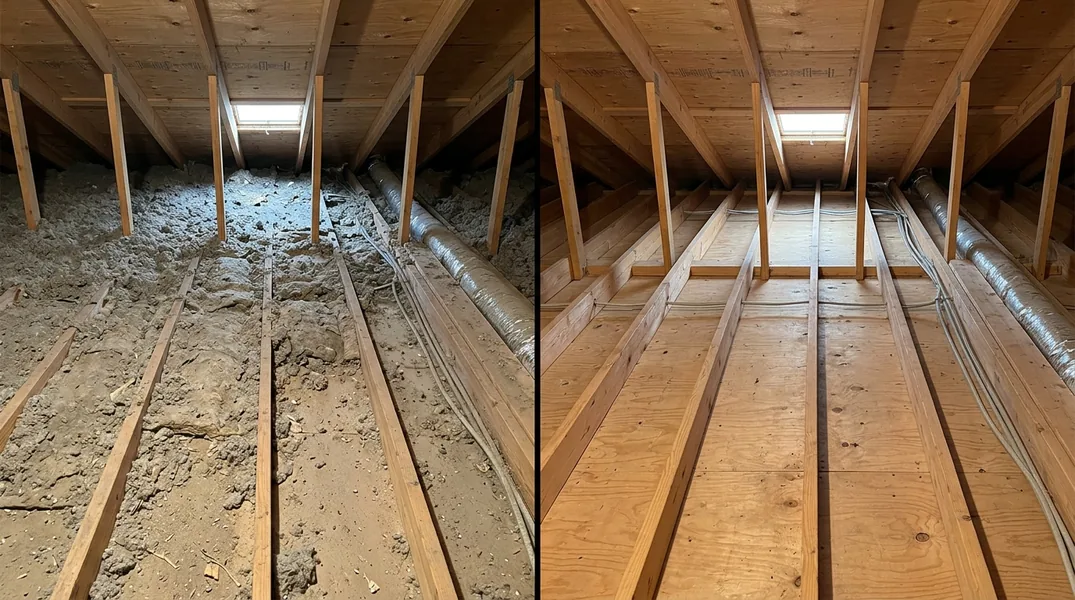
Why Pre-War Homes Near Downtown Aurora Need Better Insulation
The charming pre-war neighborhoods near downtown Aurora and along the Fox River represent some of the region's most distinctive architecture. These homes, many built in the early 1900s, feature beautiful period details, solid craftsmanship, and character that modern construction rarely matches. However, what these historic properties lack is adequate insulation. When these homes were built, energy efficiency wasn't a priority, and the insulation materials available then have often settled, degraded, or disappeared entirely over the past century.
Today's homeowners in these older Aurora properties face a real challenge: how do you modernize a century-old home without compromising its historic integrity? The answer for many is Attic Spray Foam Insulation. This modern solution can work within the existing structure, filling gaps and cavities that traditional fiberglass batts simply cannot reach. For homeowners asking 'is spray foam insulation worth it,' the answer depends on understanding both the genuine benefits and the legitimate concerns surrounding this technology.
Is Spray Foam Insulation Worth It for Historic Homes?
When evaluating whether spray foam makes sense for your pre-war home, you need to consider the real-world performance gains. Attic Spray Foam Insulation delivers an air seal that traditional insulation simply cannot match. Unlike fiberglass batts, which leave gaps around joists and penetrations, spray foam expands to fill every cavity and crack. This means your heating and cooling system doesn't have to work overtime compensating for air leaks. For homes built with balloon framing or irregular joist spacing (common in pre-war construction), spray foam adapts to the actual structure rather than forcing you to work around it.
The energy savings translate directly to lower utility bills, often by 15 to 30 percent depending on your current insulation condition and local climate. In the Fox River valley, where winter heating costs can be substantial, this payback can occur within 5 to 8 years. Additionally, spray foam provides structural support and can help prevent moisture infiltration, which is especially valuable in older homes prone to settling and shifting. The durability is also noteworthy: unlike fiberglass that can compress and degrade over decades, properly installed spray foam maintains its R-value for the life of your home.
Is Spray Foam Insulation Safe? Understanding Off-Gassing and Installation Concerns
Safety is a legitimate question homeowners ask, and it deserves a straightforward answer. Closed Cell Spray Foam Insulation and Open Cell Spray Foam Insulation are both safe when installed correctly by certified professionals. The primary safety concern centers on spray foam off-gassing, which occurs during and immediately after application. During installation, the chemical components (isocyanates and polyols) react and expand, releasing volatile organic compounds (VOCs). This is why professional installers use proper ventilation, protective equipment, and follow strict protocols. Once cured, typically within 24 to 48 hours, spray foam off-gassing is minimal and poses no ongoing health risk to occupants.
The key to ensuring safety is hiring experienced, insured contractors who understand proper application techniques and post-installation protocols. Poor installation, inadequate ventilation during application, or using substandard materials can create problems. This is why choosing a reputable local company like Aurora Spray Foam Insulation, rather than a cut-rate operator, matters significantly. We ensure your attic is properly ventilated during and after application, and we follow industry best practices established by the Spray Polyurethane Foam Alliance. Homeowners should avoid occupying the treated area for 24 hours after application and ensure adequate ventilation during the curing period. If you have respiratory sensitivities, discuss this with your contractor before work begins.
Spray Foam Insulation Problems and Off-Gassing: What Can Go Wrong
Understanding potential spray foam insulation problems helps you make an informed decision and know what to avoid. The most common issue arises from poor installation. If spray foam is applied too thickly in a single pass, it can create excessive heat and off-gassing that damages the material itself or creates structural concerns. If ventilation isn't managed properly during application, VOC concentrations can become uncomfortable or problematic. Additionally, spray foam applied to areas where it shouldn't be (like directly against electrical wiring or in spaces requiring future access) can create maintenance headaches down the road.
Another concern involves moisture management. In some climates or applications, closed-cell foam can trap moisture if not installed with proper vapor barriers or ventilation considerations. This is particularly relevant in older homes where the existing structure may already have moisture issues. Quality contractors assess your specific situation and recommend the right foam type and installation approach. Off-gassing concerns, while manageable with proper technique, do require honest discussion. Some homeowners report mild odors or headaches if they enter the attic too soon after application or if ventilation was inadequate. This is entirely preventable through professional installation and post-application care protocols. The difference between a problematic installation and a successful one often comes down to contractor experience and attention to detail.
Spray Foam Insulation Pros and Cons: The Complete Picture
To help you weigh your options fairly, here's an honest assessment of the advantages and disadvantages. The pros include superior air sealing, high R-value per inch (especially with closed-cell foam), long-term durability, moisture resistance, and potential energy savings of 15 to 30 percent. Spray foam also provides structural reinforcement, can reduce noise transmission, and works well in irregularly shaped spaces common in historic homes. For pre-war properties near downtown Aurora struggling with drafts and inconsistent temperatures, these benefits are substantial and often justify the investment.
The cons deserve equal consideration. Spray foam costs more upfront than traditional insulation, typically 2 to 3 times the price of fiberglass. There's a learning curve for homeowners unfamiliar with the technology, and installation quality varies significantly based on contractor expertise. Off-gassing during application requires proper precautions and temporary displacement. In some cases, spray foam can be difficult to remove if future renovations are needed, though this is rarely a practical concern for permanent attic insulation. Some homeowners worry about chemical exposure, though this concern is largely mitigated by professional installation and proper curing time. Finally, not all situations require spray foam; sometimes Wall & Injection Foam Insulation or traditional methods work just as well at lower cost.
Attic Spray Foam Insulation Near Me: When to Call Aurora Spray Foam Insulation
If you own a pre-war home in or near downtown Aurora and you're experiencing high heating bills, drafts, or temperature inconsistencies between rooms, it's time to get a professional assessment. Aurora Spray Foam Insulation serves the entire Aurora area and understands the unique challenges of historic properties along the Fox River corridor. We can evaluate your current insulation, identify air leaks, and recommend whether spray foam, closed-cell foam, open-cell foam, or another solution makes sense for your specific home and budget.
The best first step is to contact us for a free estimate. We'll visit your home, ask detailed questions about your comfort concerns and energy goals, and provide a transparent assessment with honest pricing and recommendations. You can reach Aurora Spray Foam Insulation at (331) 258-5715 to schedule your consultation. There's no obligation, and we'll help you understand exactly what spray foam can and cannot do for your particular situation. Whether your pre-war home needs full attic insulation, targeted injection foam in walls, or a hybrid approach, our team has the expertise to deliver results that respect your home's character while modernizing its performance.
Looking for a professional spray foam insulation contractor in Aurora? Aurora Spray Foam Insulation responds fast for all your spray foam insulation needs.
Get a Free Quote